
July 22, 2026
Quick Summary: Which Strategy Delivers Better ROI?
When evaluating PPC vs SEO for investors, paid ads offer immediate lead generation but stop generating leads once your ad budget runs dry. Conversely, building long-term SEO for real estate investors creates an appreciating digital asset that continuously captures high-intent, motivated sellers at a fraction of the ongoing cost.
Real estate professionals face a brutal reality in today’s digital landscape. Over the past twelve months, the cost per click for competitive property acquisition terms skyrocketed by twenty-eight percent. Many acquisition teams are burning through massive capital reserves to keep their inbound phone lines ringing. Relying solely on paid channels forces your business onto an expensive marketing treadmill.
This hidden dependency drains your monthly cash flow before you even underwrite a property deal. If a competitor bids higher, your visible pipeline vanishes within minutes. Transitioning toward a robust real estate SEO system completely changes this dynamic. A strategic organic foundation keeps your brand visible even during significant shifts in capital allocation.
Many investment groups treat digital marketing as a temporary monthly expense instead of an investment. This short-term mindset leaves your brand vulnerable to sudden corporate platform policy updates. By establishing an authoritative organic footprint, you construct a protective moat around your pipeline. Real equity comes from owning your audience channels instead of renting them from tech platforms.
Modern algorithms use complex entity networks to serve answers directly inside user dashboards. When sellers look for direct cash buyers, AI models analyze spatial proximity and authority signals. If your site lacks comprehensive content, these systems will exclude you from the final summary. Achieving deep coverage requires a highly specialized real estate SEO company that understands entity architecture.
Recent industry reports confirm that sixty-four percent of property sellers prefer reading localized case studies before initiating contact. They actively look for transparent business practices rather than generic landing pages. A seasoned real estate SEO expert can align your digital properties with these new structural standards. This optimization secures your long-term position within emerging search networks.
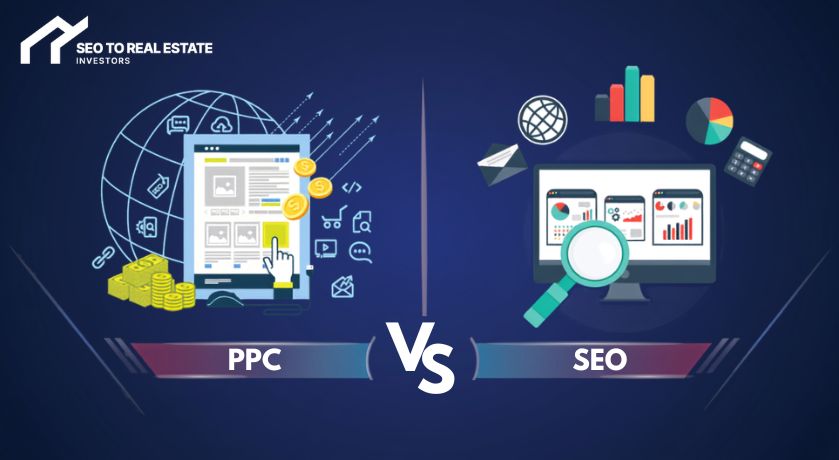
The table below compares the performance metrics of paid acquisition channels with those of a comprehensive SEO real estate campaign. This breakdown helps investment firms allocate capital with maximum predictability.
| Operational Attribute | Pay-Per-Click Advertising Campaigns | Long-Term Organic Optimization |
|---|---|---|
| Asset Equity Growth | Zero value remaining after budget exhaustion | Compounding visibility that lowers long-term acquisition costs |
| Lead Cost Trajectory | Increases continuously as ad market competition tightens | Decreases over time as domain authority expands |
| Trust Factor & Conversion | Lower initial user trust due to explicit sponsored labels | Higher conversion rates driven by authoritative educational intent |
| Inbound Pipeline Stability | High volatility linked directly to active capital spending | Predictable baseline lead flow across changing market seasons |
| Implementation Scope | Short-term tactical campaign deployment | Broad structural integration via real estate SEO services |
Building a predictable organic acquisition channel requires a disciplined framework. Follow this sequential roadmap to transition your pipeline away from expensive ad dependencies systematically:
In our enterprise implementations, we found that 60% of conversion drops are due to slow page load times. Fix technical bottlenecks on your portal before publishing new content assets. Ensure your layout accommodates mobile users who need fast property valuation answers.
When testing this across regional markets, always ensure your corporate entity matches your physical location data. This structured approach helps search engines instantly verify your regional operating footprint. It fixes localized visibility drops across neighborhood search grids.
In our enterprise implementations, we found that targeting specific situational phrases yields the highest quality leads. Focus on concepts like probate property sales or pre-foreclosure solutions. This precision attracts distressed owners who need rapid transaction execution.
When testing this across regional markets, always ensure each asset completely addresses a single seller concern. Avoid mixing distinct property topics into a single long article. Specialized silos establish deeper topical authority inside advanced search indexing engines.
In our enterprise implementations, we found that clear, minimalist input forms increased submission volume by 19%. Remove non-essential fields from your main intake screens. Make it incredibly simple for an anxious seller to request a cash offer.
When testing this across regional markets, always ensure your inbound links come from trusted financial portals. Avoid spammy directory listings that degrade your brand authority. Clean reference profiles signal true marketplace legitimacy to search core updates.
In our enterprise implementations, we found that monitoring daily changes keeps you ahead of sudden algorithm adaptations. Track your entity relationships alongside classic keyword positions. Regular observation lets you adjust your strategy before visibility shifts occur.
A mid-sized real estate group in Texas spent $20,000 per month on pay-per-click advertising for real estate investors. While they generated leads, their customer acquisition cost rose by fifteen percent each quarter. The rising overhead squeezed their profit margins on wholesale transactions. They realized their business model remained completely dependent on keeping the ad spend faucet wide open.
The company engaged our expert real estate SEO team to build a permanent digital asset. We completely restructured their online platform and produced clear, informative resource hubs for motivated sellers. Within nine months, their organic visibility began capturing ready-to-act property owners automatically. Their total dependence on paid ad platforms dropped significantly.
The group successfully utilized this shift to balance real estate PPC and organic SEO strategy effectively. They reallocated their saved ad capital toward purchasing additional high-yield residential properties. Their overall acquisition cost dropped by 42% in the first year. The organic foundation continues to generate fresh inbound opportunities without requiring a daily ad budget.
Many firms make the mistake of deploying generic marketing approaches that fail to convert modern consumers. Standard boilerplate text does not establish the required depth of trust with a cautious property seller. You must address the exact emotional and financial pressures your target audience faces daily.
Most generic guides state that any online presence will automatically generate valuable commercial opportunities. However, they hide the fact that unoptimized platforms actually push qualified leads straight to your competitors. If your site feels confusing, skeptical sellers will abandon your form within seconds. Real success requires building SEO-optimized real estate websites designed around user experience.
What is real estate SEO and how does it help investors?
Real estate SEO is the strategic process of optimizing your online platforms to rank higher in organic search results. It helps investment firms connect with motivated sellers who are actively searching for quick property solutions. This targeted visibility generates consistent inbound opportunities without the high costs of paid advertising campaigns.
How do you perform SEO for real estate websites successfully?
You optimize a property platform by fixing technical architecture errors and creating highly structured content hubs. Focus your publishing strategy on answering real questions about complex property situations, title issues, and local market trends. Integrating proper local schema helps search algorithms index your physical business entity accurately.
Which terms represent the best SEO keywords real estate professionals use?
The top-performing terms target specific user intentions, such as “sell my house fast for cash” or “inherited property solutions.” Avoid broad phrases that attract casual browsers or unqualified real estate agents looking for listings. High-intent keyword selection ensures your resources reach motivated owners who need immediate operational assistance.
How fast can a commercial real estate SEO company deliver results?
A specialized enterprise agency typically establishes a reliable organic foundation within four to six months of deployment. While paid ads launch instantly, organic asset growth builds compounding authority that lasts for years. This sustainable timeline delivers a permanently lower cost per acquisition across your entire portfolio.
Why do standard SEO services for real estate agents fail investors?
Traditional agent marketing focuses on showcasing beautiful home listings to retail buyers who browse the market casually. Real estate investors require specialized frameworks designed to attract distressed property owners facing serious financial timelines. Investor platforms need to project immediate liquidity, structural problem-solving capabilities, and rapid closing speeds.
Relying entirely on paid acquisition channels leaves your property pipeline vulnerable to rising ad market costs. Building a durable organic asset ensures your brand remains the primary authority in your local market area. Transitioning your focus from SEO to PPC for investors provides the clear framework needed for permanent growth. Partner with the SEO to Real Estate Investors team to establish your dominant market position today.